
Fire escape compliance in NYC involves more than one rule. Building height, use, landmark status and existing violations can determine which requirements apply to your property. This NYC fire escape compliance guide explains the main regulatory tracks, how they overlap, and what building owners should know about inspections, certification, violations and repairs.
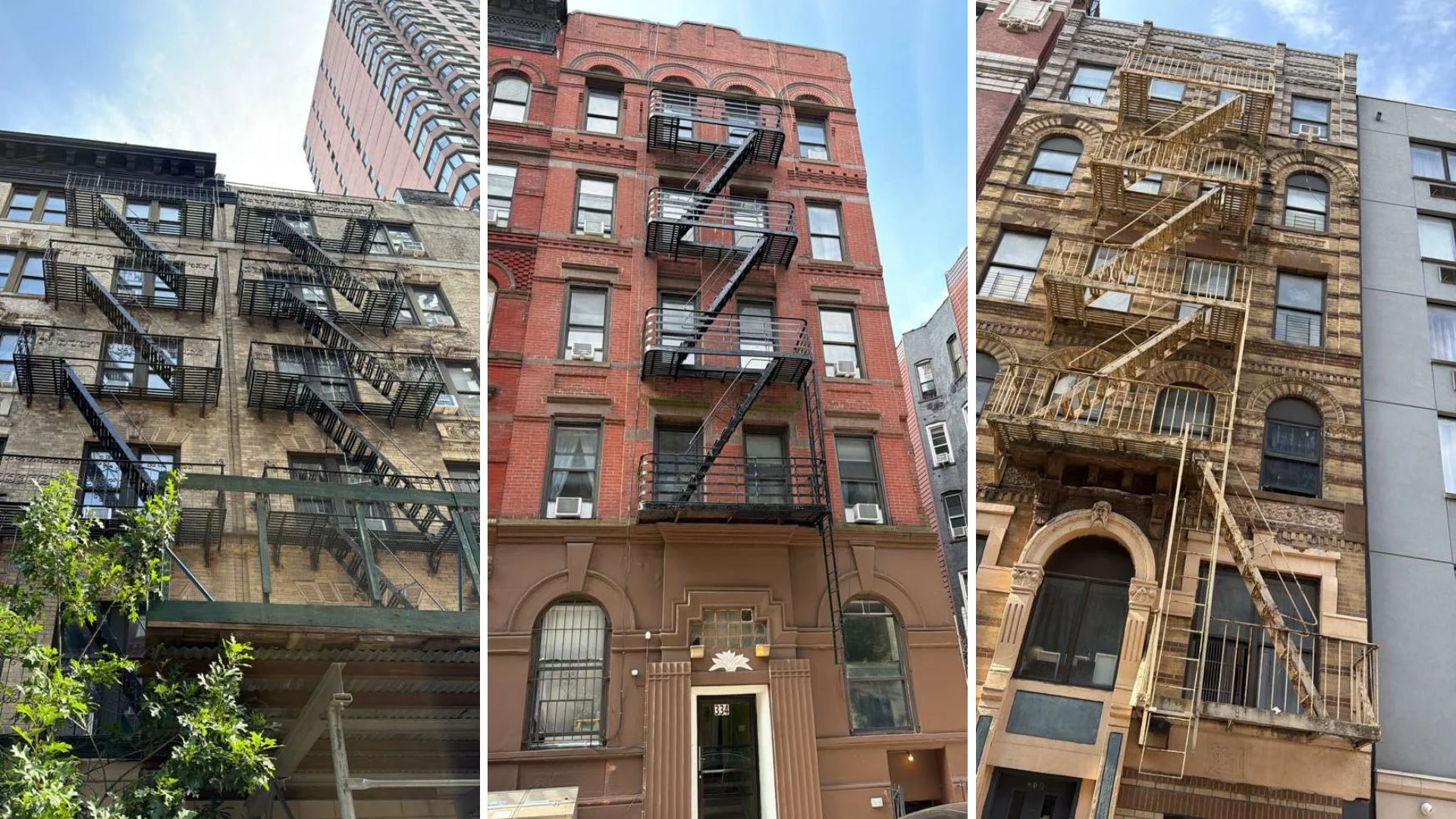
Many property owners assume there is one "fire escape law" they need to follow. In reality, NYC fire escape requirements can involve several regulatory systems.
For buildings higher than six stories, the Façade Inspection & Safety Program (FISP), commonly associated with Local Law 11, requires exterior walls and appurtenances to be inspected every five years by a Qualified Exterior Wall Inspector (QEWI). If a building has an existing DOB, OATH or FDNY violation, correcting that condition creates another compliance obligation.
Landmark status can add another layer. The Landmarks Preservation Commission (LPC) regulates certain work affecting fire escapes on designated landmarks and properties in historic districts.
The result is that asking whether a fire escape is "up to code" in NYC requires looking at the building as a whole rather than checking one rule.

Local Law 11 refers to NYC's façade safety requirements administered through FISP. Buildings higher than six stories must have their exterior walls and appurtenances inspected every five years, with the required technical report filed with the NYC Department of Buildings.
Fire escape certification should not be confused with the five-year FISP cycle. Different NYC buildings can have different inspection and certification obligations based on their use and regulatory status. Requirements may address the condition of fire escapes, access to means of egress, obstructions, and other safety concerns.
If you are unsure which fire escape certification requirements apply to your building, review the property's specific use, construction and regulatory records.
If a fire escape inspection, complaint or enforcement action has already resulted in a violation, the priority becomes correction. The underlying condition must be addressed, and the appropriate documentation must be submitted to close the violation. Paying a penalty does not automatically correct the physical condition or close every type of violation.
The exact process depends on the issuing agency and violation type, so owners should review the actual notice rather than assuming every fire escape violation follows the same procedure.
Landmarked buildings and properties within historic districts can have additional requirements for exterior work. The Landmarks Preservation Commission regulates certain alterations, repairs, restoration, removal and installation work affecting historic properties. Fire escape work can therefore require LPC review even when the proposed work is also intended to address a standard NYC fire escape compliance issue.
| Your situation | What may apply |
|---|---|
| Building is taller than six stories | Local Law 11 / FISP |
| Building has a required fire escape | Applicable fire escape maintenance, access, inspection or certification requirements |
| You already received a DOB or FDNY summons | Violation correction becomes the immediate priority |
| Building is landmarked or in a historic district | LPC rules may apply alongside other requirements |
Small maintenance problems can become more complicated when they are left unresolved. Surface rust can progress into deeper corrosion. Loose connections, deteriorated metal, damaged railings, defective ladders or blocked access can create safety concerns. On a building subject to FISP, unresolved exterior conditions may also affect future inspection findings.
Violations create another concern. An open violation can remain unresolved until the underlying condition is corrected and the required documentation is accepted. The safest approach is to investigate visible deterioration early. Addressing fire escape repairs as part of routine property maintenance can reduce the chance that a relatively manageable issue becomes an urgent compliance project.
Only buildings higher than six stories are subject to the FISP inspection requirement. These buildings must have their exterior walls and appurtenances inspected on the required five-year cycle. Shorter buildings are not subject to FISP solely because they have a fire escape. However, other fire escape maintenance, inspection or certification requirements may still apply.
No. They are separate regulatory processes. Local Law 11/FISP focuses on the exterior walls and appurtenances of buildings higher than six stories and follows a five-year inspection cycle. Other fire escape requirements can address ongoing maintenance, safe access, inspections or certification. A building may therefore have more than one obligation at the same time.
Start by identifying the condition described in the violation and determining what correction is required. After the underlying condition is corrected, the owner must submit the appropriate documentation, which may include a Certificate of Correction. The exact process depends on the violation and issuing agency. Paying a fine alone does not necessarily resolve the underlying compliance issue.
They can. The LPC regulates certain exterior changes to designated landmarks and properties within historic districts. Depending on the proposed fire escape work, LPC review or approval may be required in addition to standard building and safety requirements.
Start with four questions:
Building height helps determine whether FISP applies. Landmark status can determine whether LPC requirements apply. Existing violations can create immediate correction obligations. A building-specific assessment can bring these requirements together.
Ignoring visible deterioration is one of the easiest ways for a maintenance issue to become a larger fire escape compliance problem. Rust, damaged components, loose connections, deteriorated platforms and blocked access should be investigated rather than dismissed as cosmetic concerns.
A qualified fire escape contractor can help coordinate repair, maintenance and project documentation across different requirements. However, contractors, inspectors and city agencies have different roles. For example, FISP reports must be completed by a qualified QEWI, while LPC approvals and DOB filings have their own requirements. The advantage of working with an experienced NYC fire escape contractor is having the repair scope and compliance process coordinated rather than treating every issue as a separate project.
Not sure whether your building needs fire escape repair, certification, Local Law 11/FISP work, violation correction or LPC review? Get a building-specific assessment to identify the applicable requirements and determine the appropriate next step.
Get a Free Fire Escape Compliance Assessment →