
If your building is over six stories, its exterior walls and appurtenances fall under New York City's Façade Inspection & Safety Program. We coordinate the inspection-related repair work, documentation and filing process so owners can address defects before they become larger enforcement problems.
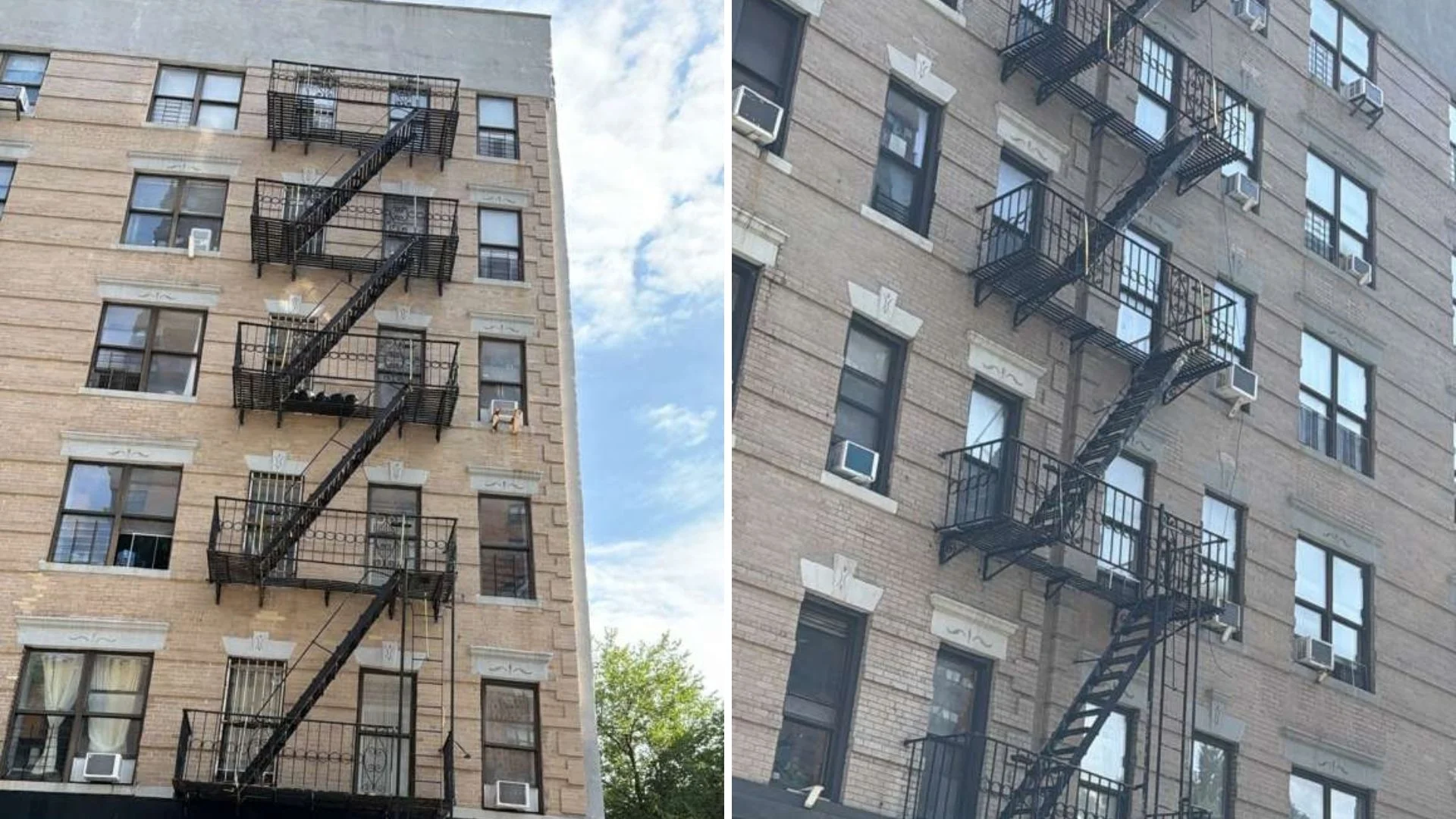
Local Law 11 is the common name for New York City's Façade Inspection & Safety Program (FISP). The program requires owners of buildings higher than six stories to have exterior walls and appurtenances inspected every five years and to have a technical façade report filed with the NYC Department of Buildings.
The technical report is submitted through DOB NOW: Safety by a Qualified Exterior Wall Inspector (QEWI). A QEWI is a qualified registered design professional responsible for examining the façade and assigning the applicable condition classification.

FISP covers more than masonry walls. Appurtenances associated with the exterior can also fall within the inspection scope. For a building owner, that means deterioration affecting exterior metalwork can become part of a broader façade safety issue.
Corrosion, unstable connections, damaged supports or deteriorated components may need to be addressed rather than treated as ordinary painting. The inspection is therefore about the condition and safety of the building's exterior, not simply whether a structure looks well maintained from the sidewalk.
FISP reports use three primary condition classifications:
SWARMP conditions are not simply ignored until the next inspection. DOB requires the owner to complete the recommended work by the SWARMP completion date stated in the report. An Unsafe classification is more urgent because public protection may need to be installed immediately while corrective work is arranged.
Buildings subject to the program are assigned to filing sub-cycles. Owners need to know both the applicable cycle and the deadline for their property rather than assuming every building has the same filing date. The current program continues through Cycle 10, with individual properties assigned to specific sub-cycles. DOB provides filing-status information and cycle resources for owners and professionals.
We help owners understand where their property sits within the FISP schedule and what physical work may need to be addressed before the inspection or filing. This matters particularly for older Manhattan buildings where previous reports may have identified recurring deterioration. A current assessment can be compared with prior findings so repairs are planned around the actual condition rather than starting from scratch every time.
An overdue or missing report can result in a DOB violation and financial penalties. The filing itself is only one part of the process. Owners also need to address conditions identified by the QEWI and maintain the exterior in a safe condition between inspection cycles.
DOB's filing requirements also make clear that reports need accurate documentation, photographs and repair information. Incomplete submissions can create additional delays. The practical lesson is simple: do not wait until the deadline is close to discover that deteriorated metalwork needs substantial repair.
DOB states that unsafe conditions must be repaired within 90 days of the filing of the technical report. If the work cannot be completed within that period, the QEWI must file the appropriate extension request through DOB NOW: Safety.
Public protection may also be required while the condition remains unresolved. Depending on the circumstances, this can include measures such as a sidewalk shed or construction fence. The 90-day period should therefore be treated as a serious project deadline, not as permission to postpone the repair.
Once the Unsafe conditions have been corrected, an amended report must be filed. DOB's current filing guidance requires the amended report to clearly identify how the Unsafe conditions were corrected and confirm that there are no remaining Unsafe conditions.
The Department also reviews related permits, open façade violations and the stability of applicable appurtenances. We coordinate the physical correction work with the QEWI and filing professional so the completed repairs and technical documentation remain consistent.
The QEWI is responsible for the official technical examination and FISP report. Our role is to support the physical side of the project and provide documentation of the work performed.
That can include condition photographs, repair records, measurements and before-and-after documentation that help the project team understand what was corrected.
Depending on the findings, corrective work can include corrosion removal, welding, replacement of deteriorated components, connection repairs, surface preparation and protective coating.
The goal is to correct the underlying deterioration rather than cover it cosmetically. DOB specifically notes that façade repairs should address underlying causes rather than only the visible deterioration.
We work alongside the QEWI, architect or other filing professional responsible for the technical submission.
That coordination matters when repair work affects an item specifically identified in the report. The physical scope needs to match what the technical documentation says was corrected.
If your building already has a DOB or FDNY summons, the project becomes more than routine maintenance. The first step is identifying the agency, violation classification, cited condition and remaining deadline. Physical correction and administrative closeout then need to be handled together.
Our work covers Manhattan's older residential corridors, landmark districts and high-rise commercial areas, including the Upper West Side, Upper East Side, Harlem, Washington Heights, Morningside Heights, Midtown, Hell's Kitchen, Chelsea, Gramercy, Murray Hill, Greenwich Village, West Village, East Village, SoHo, NoHo, Tribeca, Lower East Side, Financial District, Battery Park City and Roosevelt Island.
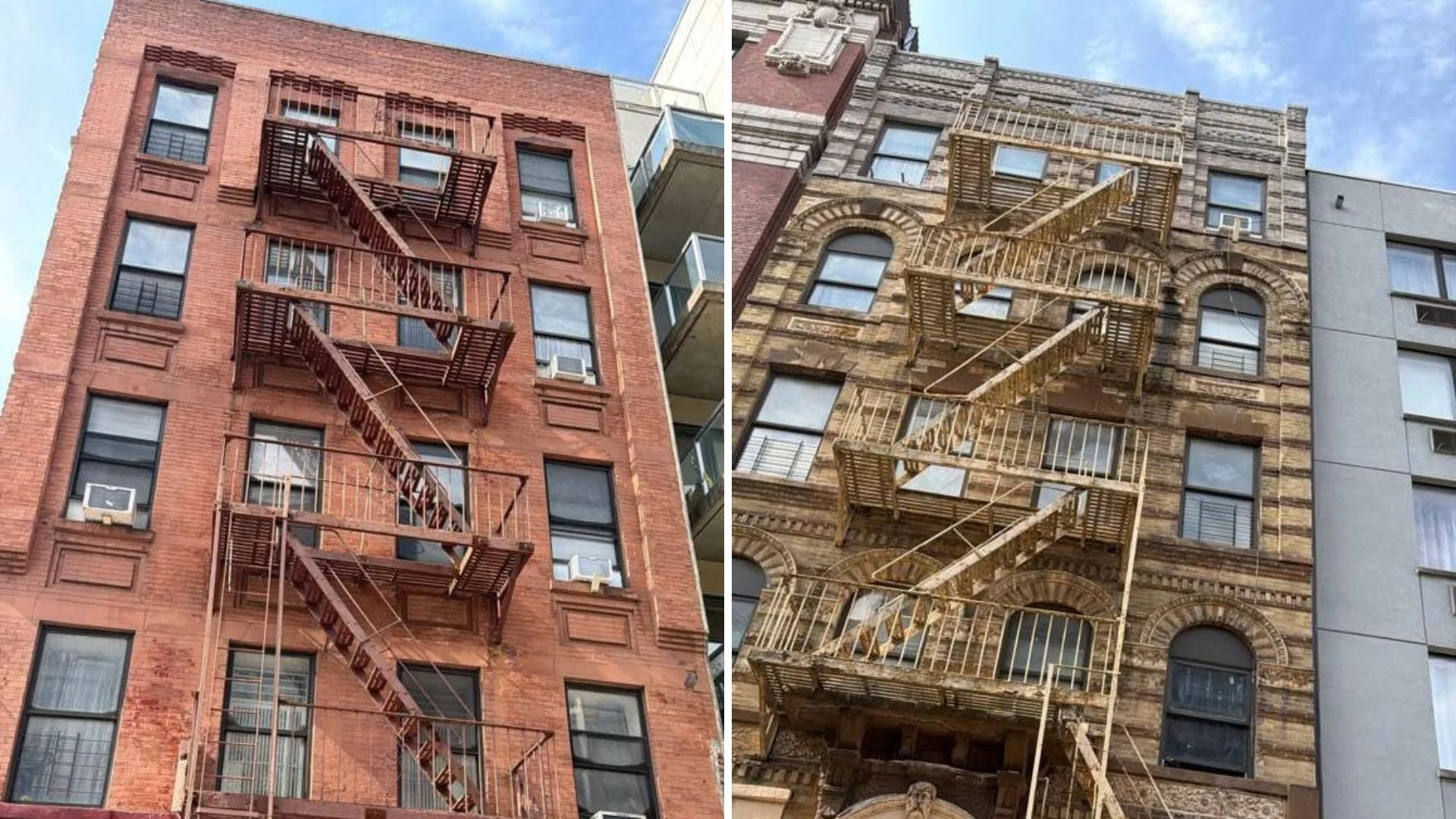
It is New York City's Façade Inspection & Safety Program. Buildings higher than six stories must have exterior walls and appurtenances inspected every five years, with a technical report filed with DOB.
If the building is higher than six stories, it is generally subject to the program. The official requirement covers buildings higher than six stories and requires recurring five-year examinations. Shorter buildings are outside FISP, although they may still have separate maintenance, safety, permit or inspection obligations.
Safe means no repair or maintenance is required during the applicable period. SWARMP means the condition is currently safe but needs repair or maintenance by the date identified in the report. Unsafe means the condition is hazardous and requires correction, with public protection required where applicable.
A missing or overdue filing can lead to DOB violations and civil penalties. Owners also remain responsible for addressing unsafe conditions and maintaining the exterior in a safe condition.
DOB requires Unsafe conditions to be repaired within 90 days of the technical report filing, unless an acceptable extension applies. After correction, an amended report must be filed.
We handle the physical repair and documentation side and coordinate with the QEWI or other filing professional responsible for the official FISP submission. The technical report itself must be filed by the qualified professional through DOB NOW: Safety.
Yes. We can assess the cited condition, complete the necessary corrective work and coordinate the documentation required for closeout.
There is no fixed price because the scope depends on the condition, number of components, access requirements and extent of deterioration. We assess the property and provide a project-specific estimate before work begins.
If your building is approaching its FISP deadline, has received an Unsafe rating or already has deterioration identified in a previous report, address the physical work before the next filing becomes urgent. We can review the condition, coordinate with your QEWI and help organise the repair work around the applicable filing requirements.
Get a Free Local Law 11 Compliance Assessment →