
From a loose bracket to a compromised connection, the first step is understanding what is actually failing. We assess the structure's condition, identify safety-critical components, and determine whether the right solution is adjustment, component replacement, reinforcement, or structural welding.
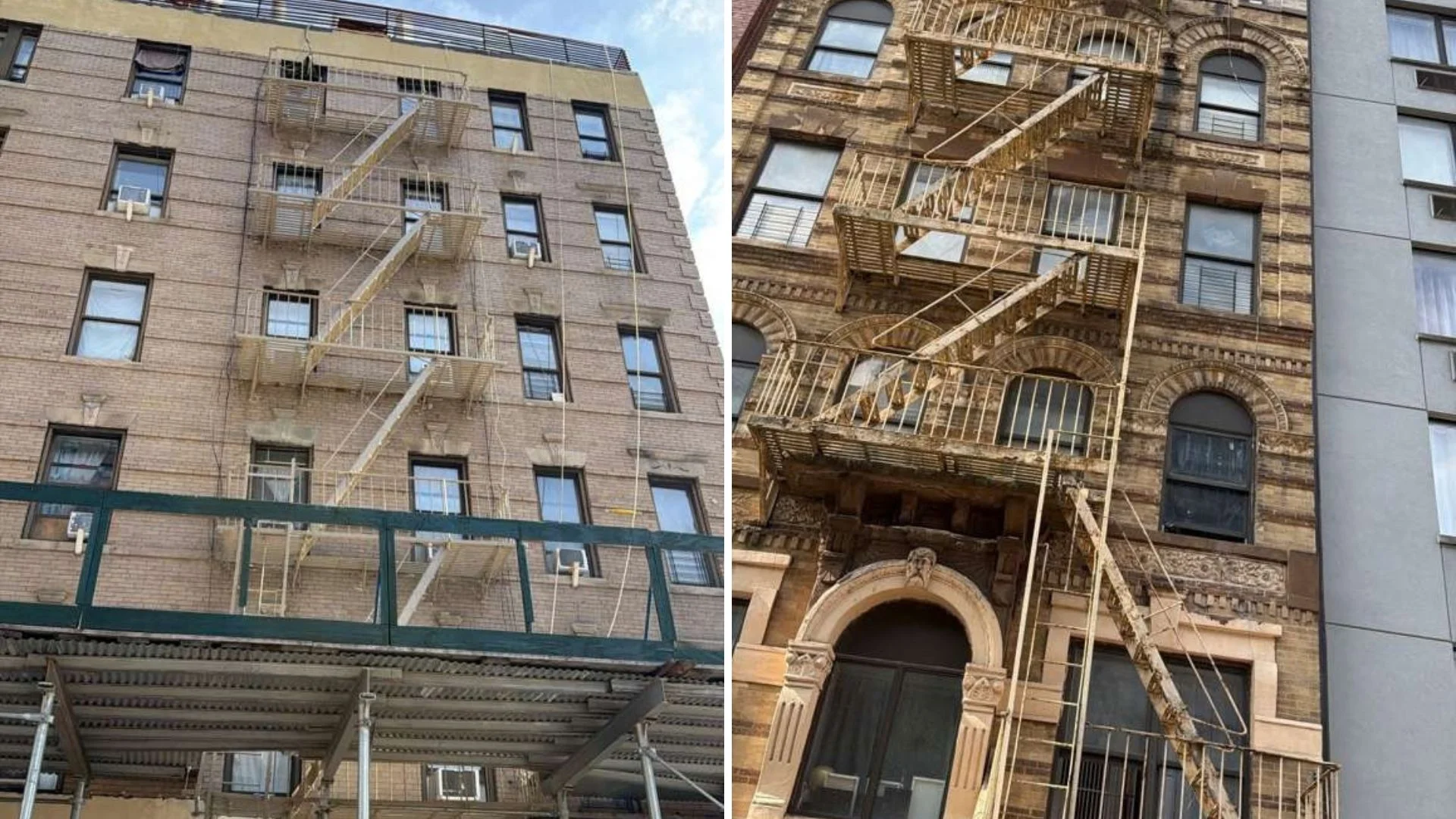
Every job starts with an inspection of the problem area – not simply the most obvious rust or damaged metal. We look at the condition of load-bearing components, connections, platforms, stairs, brackets, ladders, and moving mechanisms.
Not every defect requires the same response. We explain what needs attention now, what can be addressed as part of a larger project, and what should be evaluated by an appropriate design professional.

A fire escape ladder has to work when someone actually needs it. We work on common ladder configurations, including drop/gravity ladders and counterbalanced stair ladders. Typical problems include seized pivot points, damaged hardware, obstruction, corrosion around the mechanism, and ladders that no longer lower or swing as intended.
The NYC Fire Code specifically requires fire escape ladders to remain unobstructed and requires moving components to be maintained in good working order. Where a mechanism can be serviced or a component replaced, we focus on correcting the actual failure rather than unnecessarily replacing an entire assembly.
Cantilever and balance systems have their own mechanical considerations. When a retractable stair assembly binds, becomes difficult to deploy, or no longer balances properly, the problem may involve the pivot, hardware, counterbalance components, or surrounding steel.
We assess the mechanism and surrounding connections together so a mechanical problem isn't mistaken for a cosmetic one.
The connection between a fire escape and the building deserves particular attention. Loose anchor bolts, deteriorated brackets, damaged connection plates, and corrosion around attachment points can affect how the structure transfers loads back to the building.
We inspect the accessible connection area and identify visible deterioration before recommending tightening, component replacement, reinforcement, or further evaluation where appropriate.
A localized defect doesn't automatically mean the entire structure needs restoration. We address individual problems such as:
Where a component can be safely repaired or replaced independently, that option can be more practical than treating the entire assembly as a restoration project.
Welding has a specific role: restoring or reinforcing a compromised steel connection or component where welding is an appropriate repair method. That may involve a deteriorated joint, damaged steel member, connection plate, or localized section affected by long-term corrosion or impact.
Hot work is not simply a matter of bringing equipment onto a rear-yard landing. NYC regulates hot-work activities, and FDNY requirements can include permits, approved equipment, fire-safety measures, and qualified personnel depending on the work and location. NYC also maintains a specific licensing framework for structural welders.
| Repair | Restoration | Emergency Repair |
|---|---|---|
| Loose brackets | Widespread corrosion | Storm damage |
| Damaged treads | Extensive steel deterioration | Vehicle impact |
| Seized ladder mechanisms | Multiple compromised sections | Severe structural damage |
| Damaged connections | Major platform deterioration | Unsafe loose components |
| Localized rust damage | Structure-wide rehabilitation | Ladder failure during an urgent situation |
Not sure which one applies? We assess the condition first and explain whether targeted corrective work, broader restoration, or urgent attention makes the most sense.
Physical corrective work can be an important part of addressing conditions identified during an inspection or reported as a violation. However, completing a repair does not automatically change a building's regulatory status.
For FISP-covered buildings, the applicable report and filing process involves qualified design professionals and DOB requirements. The City's FISP framework uses conditions such as SAFE, SWARMP, and UNSAFE, with the appropriate professional determining the condition and required reporting.
Our role is to address the physical condition within our scope and provide project documentation that can help your building team understand what was corrected.
Already dealing with an open DOB or FDNY matter? See our Fire Escape Violation Removal service.
Access can be one of the hardest parts of this type of work. Rear-yard structures, narrow courtyards, limited staging areas, occupied apartments, and difficult material routes can all affect how a project has to be planned.
We serve property owners and building managers throughout Harlem, Washington Heights, Inwood, Morningside Heights, Upper West Side, Upper East Side, Midtown, Hell's Kitchen, Chelsea, Flatiron, Gramercy, Murray Hill, East Village, West Village, Greenwich Village, SoHo, NoHo, Tribeca, Lower East Side, Financial District, Battery Park City, and Roosevelt Island.

Look at the extent of the deterioration rather than the age of the structure alone. A localized bracket, ladder mechanism, tread, or platform issue may be suitable for targeted work. Widespread section loss, multiple compromised connections, or deterioration across several structural components may call for restoration. We assess the condition before recommending which route makes sense.
No. Welding is only one possible repair method. Depending on the defect, the appropriate solution may involve replacing hardware, servicing a mechanism, replacing a deteriorated component, tightening an accessible connection, or using another suitable repair method.
Work around occupied buildings requires planning beyond the repair itself. Hot-work operations must account for the work area, combustible materials, access, fire protection, and applicable FDNY requirements. The exact controls depend on the location and scope of work.
Treat a ladder that cannot deploy correctly as a priority issue. NYC Fire Code provisions require fire escape ladders to remain unobstructed and moving components to remain operational. If the mechanism is seized, damaged, or otherwise unreliable, it should be evaluated rather than left for routine maintenance.
It can, when the physical defect being cited is within the scope of the repair. However, correcting the physical condition and closing a violation are not necessarily the same administrative step. The appropriate filing, inspection, or Certificate of Correction process depends on the specific violation and agency involved.
There is no reliable one-size-fits-all timeline. A straightforward localized issue may take substantially less time than a multi-component project involving fabrication, difficult access, or structural work. After assessing the condition, we can give you a more realistic scope and schedule instead of promising a generic turnaround.
Potentially, yes, but landmark status can change the project requirements. Work affecting designated historic properties may involve Landmarks Preservation Commission considerations, particularly where exterior features, materials, or appearance are being changed. The required review depends on the property and proposed work.
Corrosion is a major factor because exterior steel is continually exposed to moisture and weather. Mechanical wear can affect ladders and balance mechanisms, while damaged connections, aging components, poor previous repairs, and accidental impact can create additional problems.
Don't wait until a loose connection, seized ladder, or deteriorated platform becomes a larger problem. Tell us what you're seeing, share photos if available, and we'll help determine the next practical step.
Get Your Free Assessment →